
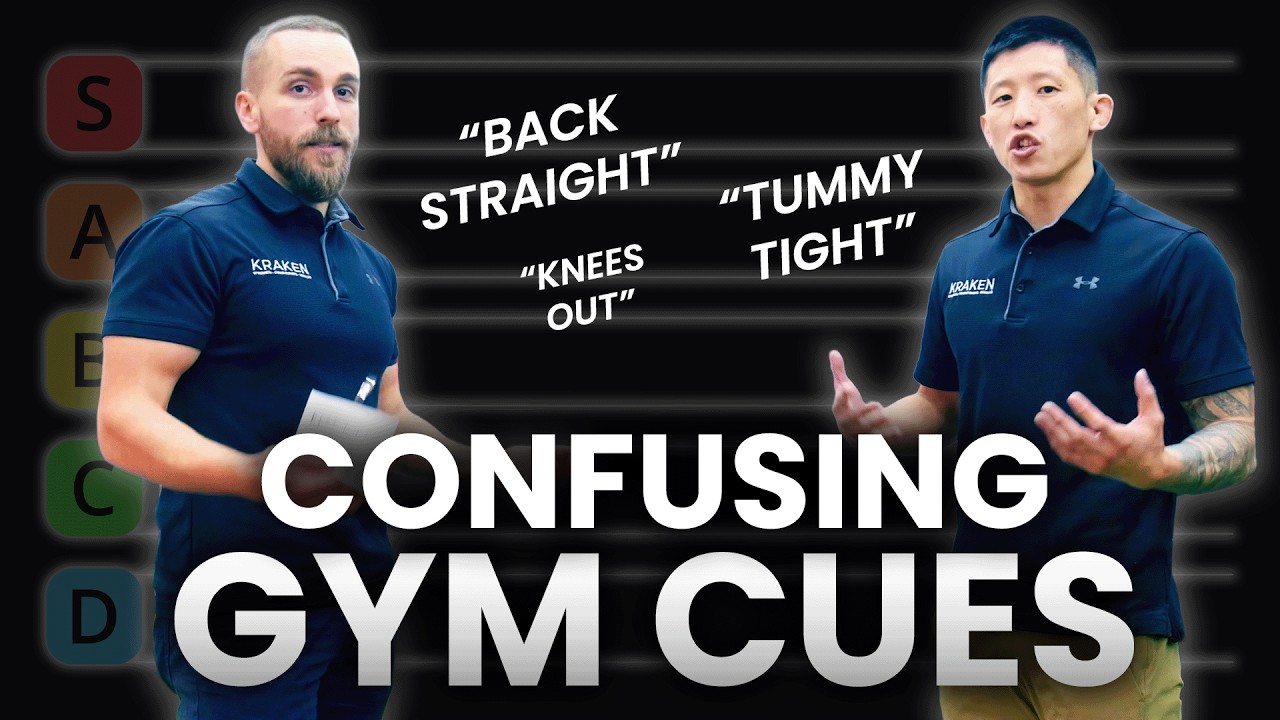
Gym coaching cues like “keep your back straight” and “knees out” are repeated constantly, but many of them cause more harm than good. Kraken Fitness trainers in North Burnaby ranked eight of the most common cues and found that no single cue deserves S-tier because every cue is contextual. A good trainer adapts the cue to the person, not the other way around.
Watch: Gym Cues Tier List
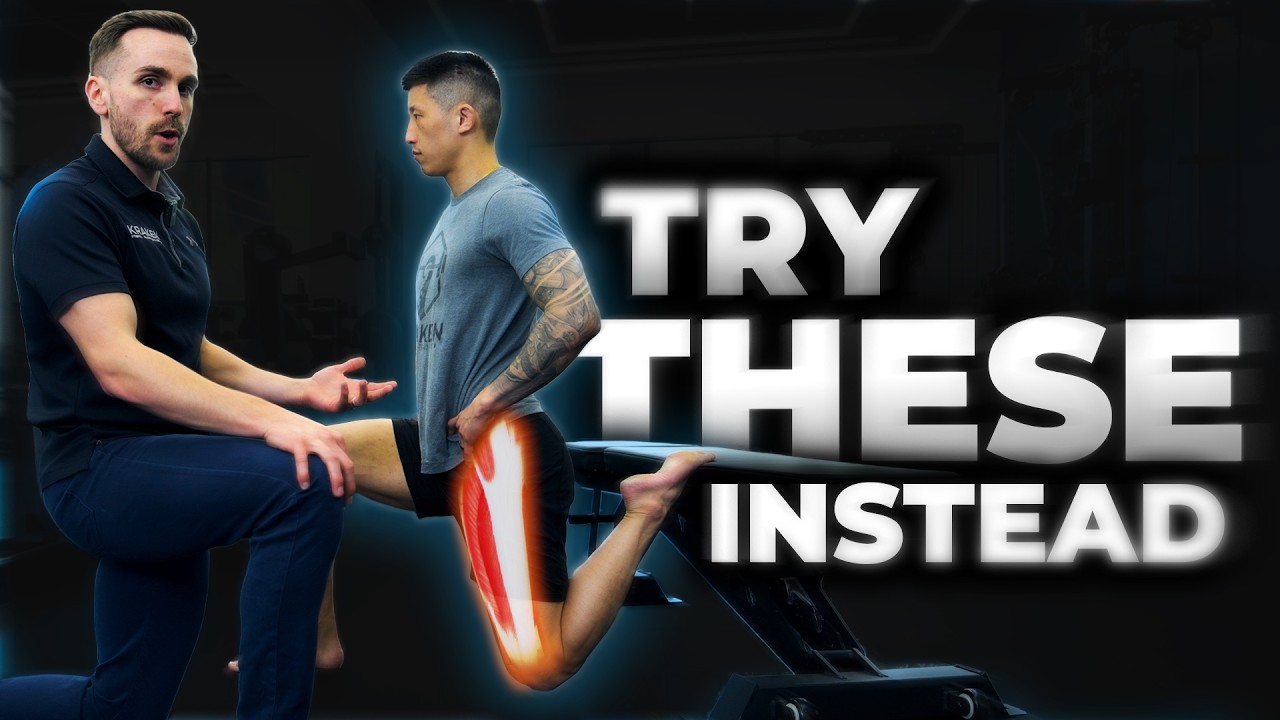
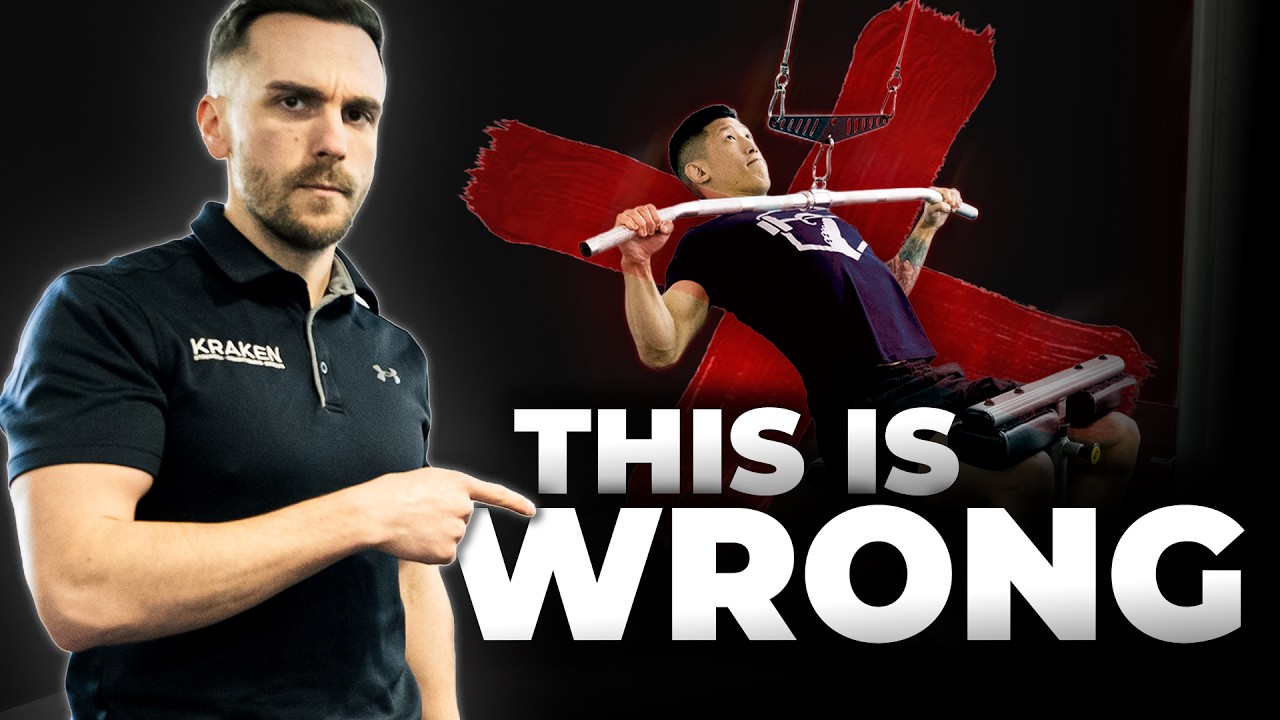
In this video, Josko and Brandon from Kraken Fitness rate eight of the most commonly used gym coaching cues on a tier list, explaining what each one gets wrong, what it gets right, and when it might actually work.
D-Tier: The Cues That Cause Confusion
Three cues landed in D-tier because they consistently create more confusion than they solve: “keep your back straight,” “keep your tummy tight,” and “knees out.” These cues sound helpful but they’re too vague to produce the right movement. Most beginners interpret them in ways that make their form worse, not better.
“Keep your back straight” is the classic Instagram comment under every deadlift video. The problem is that it doesn’t specify what part of the back. A person who is rounding their upper back hears “keep your back straight” and may try to arch their lower back even harder. It doesn’t distinguish between what should happen at the neck, upper back, or lower back, and each of those areas might need a different correction. Josko used this cue early in his coaching career and watched it fail consistently. People simply don’t know what “straight” means in this context.
“Keep your tummy tight” (or “keep your core engaged”) is another beginner-trainer staple. It sounds right, but most people interpret it as sucking their belly button toward their spine. That’s the opposite of what you want during compound lifts. The goal is to create intra-abdominal pressure by bracing outward, not pulling inward. When someone sucks in their stomach during a heavy squat, they lose the stability the cue was supposed to create. A better approach is to teach the bracing pattern directly rather than relying on a phrase that gets misunderstood almost every time.
“Knees out” gets the same treatment. When a client’s knees cave inward during a squat, yelling “knees out” treats the symptom, not the cause. The knees are caving because of what’s happening at the ankle or the hip. Cueing at the foot or the hip joint addresses the root problem. Telling someone to force their knees outward can lead to rolling off the toes, lifting the inside of the foot, and creating a different set of problems. If the person needed two or three mobility exercises before they could naturally keep their knees tracking properly, no amount of “knees out” is going to fix it mid-set.
C-Tier: Decent But Easy to Misuse
Two cues landed in C-tier: “chest up” and “pinch your shoulders.” Both can work in the right context, but they carry enough risk of misinterpretation that Kraken’s trainers reach for better alternatives first.
“Chest up” is a cue that most people in a kyphotic (rounded) position can understand at a surface level. The issue is what happens next. When someone hears “chest up,” they often flare their ribcage, lift their chin, or pull their shoulders all the way back. During a deadlift, pulling the shoulders back is not the goal. During a bench press, people hear “chest up” and retract their shoulder blades too aggressively, when they actually want upward rotation of the ribcage. Josko prefers “chest tall” because it encourages vertical extension rather than the ribs-flared, overextended position that “chest up” often produces.
“Pinch your shoulders” works at the right moment but causes problems when applied to the entire movement. During a row, you want the shoulder blades to move freely through the full range of motion, with the pinching happening at the end of the pull, not throughout. Keeping the shoulders pinched the whole time restricts natural scapular movement. The same applies to pressing movements. People who hold their shoulder blades pinched during a bench press lose the ability for the scapula to move properly. And the cue doesn’t address ribcage position at all, so someone might achieve a good shoulder pinch while sacrificing thoracic spine position — which defeats the purpose.
Both C-tier cues aren’t bad. They’re incomplete. A trainer who understands their limitations can use them selectively, but they shouldn’t be the first option.
B-Tier: Solid Everyday Cues
“Stay tall” is the B-tier cue that Josko and Brandon both agreed on quickly. It’s the upgraded version of “chest up” — it encourages vertical extension without the rib-flare risk. When someone hears “stay tall,” they tend to lengthen through the spine rather than thrust their chest forward or pull their shoulders back. It’s a cleaner image that produces a cleaner movement.
The reason it doesn’t rank higher is the same reason every cue on this list has limitations: context. “Stay tall” works well for squats, deadlifts, and standing movements where spinal extension and length are the goal. It could even work as a bench press cue if interpreted as maintaining stacked positioning. But it’s not specific enough for every situation, and some clients need a more targeted correction than a general “stay tall” can provide.
What makes B-tier different from C-tier is reliability. “Stay tall” rarely causes the opposite problem. When someone misinterprets “chest up,” they can end up in a worse position than they started. “Stay tall” doesn’t carry that risk. The worst case is that the person doesn’t fully understand it and needs a follow-up cue. That’s a much better failure mode than a cue that actively creates a new problem.
This is a cue that Kraken’s trainers use regularly with clients in North Burnaby, especially during warm-ups and compound lifts. It serves as a reliable baseline that gets refined with more specific cues once the client’s movement pattern is established.
A-Tier and Why Nothing Is S-Tier
Two cues made A-tier: “ribs down” and “tuck your tailbone.” Both are specific, actionable, and address real problems that most gym-goers have.
“Ribs down” is a direct answer to the overextension pattern that so many beginners default to. When someone flares their ribcage during overhead presses, squats, or deadlifts, “ribs down” gives them a specific body part and a specific direction. It’s a step up from “keep your back straight” because it tells the person exactly what to do and where to do it. Brandon noted that this cue is underused among coaches because many trainers don’t fully understand what a neutral spine position requires. At Kraken Fitness, “ribs down” is one of the most frequently used cues, particularly with clients who come from a background of overextending during lifts.
“Tuck your tailbone” is Josko’s personal favorite. Most people default to an anterior pelvic tilt during exercises, with their lower back arched and their pelvis tipped forward. “Tuck your tailbone” corrects this directly. It engages the posterior chain and helps create the braced, neutral position needed for safe lifting. The one downside is that some people over-tuck, going past neutral into a posterior pelvic tilt. But even that is useful, because once they’ve over-tucked, a trainer can find the midpoint between the extremes. The over-correction becomes a teaching tool.
Why nothing is S-tier: This was the most important takeaway from the entire ranking. No cue is perfect for every person, every exercise, or every situation. A cue that works brilliantly for a deadlift might be irrelevant during a lateral raise. A cue that clicks for one client might confuse another. Even the D-tier cues — “keep your back straight,” “keep your tummy tight,” “knees out” — can work for a client who has already learned the proper movement patterns and just needs a quick reminder.
The real skill isn’t knowing which cue is “best.” It’s knowing which cue works for this person, in this exercise, at this moment. That’s what separates a good trainer from someone who just memorized a list of phrases.
FAQ
What is the best coaching cue for beginners at the gym?
There is no single best cue. “Ribs down” and “tuck your tailbone” rank highest because they’re specific and actionable, but the best cue depends on the person and the exercise. A good trainer matches the cue to the individual, not to a universal list.
Why do so many gym cues cause confusion?
Most common gym cues are too vague. Phrases like “keep your back straight” or “keep your core tight” can mean different things to different people. Without specificity about which body part to move and in which direction, people guess, and they usually guess wrong.
Should personal trainers use cues during every exercise?
Cues are most useful during compound lifts where multiple joints are moving at once. Simple isolation exercises may not need cueing at all. Over-cueing can overwhelm beginners. Kraken’s trainers prioritize one or two cues per exercise rather than correcting everything at once.
What does “ribs down” mean during a workout?
“Ribs down” means bringing the front of the ribcage downward toward the pelvis instead of letting it flare upward. This helps maintain a neutral spine position during lifts. It’s especially useful for people who tend to overextend their lower back during overhead or pulling movements.
How do Kraken Fitness trainers decide which cues to use?
Kraken’s coaches base cue selection on each client’s individual movement patterns identified during the initial assessment. Trainers watch how a client moves, identify the specific compensation pattern, and choose the cue that addresses that pattern directly rather than defaulting to generic phrases.
Ready to Train with Coaches Who Actually Know How to Cue?
Kraken Fitness is a personal training gym in North Burnaby near Brentwood. Every client gets a movement assessment before training starts, so cues are specific to your body, not copy-pasted from a textbook. Try a free week — no commitment, no pressure.