
TL;DR: Building muscle takes more than just showing up to the gym and eating protein. Kraken Fitness trainers in North Burnaby (near Brentwood) break down what actually matters: building a strength foundation first, eating real nutrients instead of just chicken and rice, and recovering enough to let your body do its job. Most people who feel stuck are under-recovering, not under-training.
Why Strength Has to Come Before Size
Here is the thing most people get backwards about muscle building: they want to look bigger before they get stronger. It does not work that way.
Think of it like building a house. Strength is the foundation. Size is the house. If you try to pack on muscle without a base of strength underneath it, you are building on sand. Kraken’s trainers see this all the time in Burnaby. Someone walks in wanting bigger arms or a bigger chest, and they are still benching the same weight they started with six months ago.
That is the bottleneck. If you are a guy still pressing 100 pounds on the bench, there is only so much muscle your body can build at that level of force production. Your muscles need a reason to grow. That reason is being pushed beyond what they can currently handle.
This is why Kraken’s coaches prioritize strength early on — especially for people who are newer to training. Not because the goal changes, but because the foundation has to be there first. Once you have that underlying strength, building volume on top of it becomes way more effective.
The gym also closes a skill gap that many people overlook. Exercises like pull-ups can take years of park training to achieve from scratch. With access to machines, lighter dumbbells, and assisted variations at a gym, Kraken’s trainers can accelerate that progression dramatically.
Strength first. Then size follows.
Volume and Progressive Overload (Without the Overthinking)
Hypertrophy — the scientific term for muscle growth — comes down to one main variable: volume. That means total work done. Sets, reps, and load, accumulated over time.
But here is the part people either miss or overcomplicate: volume needs intensity behind it. You cannot build muscle with light weight and endless reps alone. If that worked, marathon runners would be the most jacked people on earth. There has to be a meaningful load on the muscle. Enough to create real stress, enough to force an adaptation.
The good news is that the rep range for building muscle is surprisingly forgiving. Anything from about 5 to 30 reps can produce solid hypertrophy, as long as you are pushing the intensity over time. You do not need to obsess over hitting exactly 8 to 12 reps. The key is that you are progressively adding more weight, more reps, or more sets over weeks and months.
That is progressive overload in a nutshell. Not a complicated program. Just a simple truth: your body will stay the size it is right now unless you give it a reason to grow. The way you give it that reason is by asking it to do a little more, consistently, over a long time.
The people who stall are usually the ones who find a comfortable routine and repeat it forever. Same weights, same sets, same reps. The body adapts to that. Kraken’s coaches program for progressive overload specifically — adjusting load, volume, and intensity as clients get stronger — so that the stimulus keeps driving real change.
Nutrition Beyond Protein: What Most People Miss
Yes, protein is essential for building muscle. That is not debatable. If you are not eating enough protein, you are not going to build muscle. Period.
But protein gets all the attention while everything else gets ignored. And that is a problem.
If you Google which vitamins and minerals are required for muscle growth, the answer is basically all of them. Vitamin D, iron, B vitamins, magnesium, zinc — they all play roles in hormone production, recovery, energy metabolism, and tissue repair. If any of those are chronically low, your muscle-building efforts will stall or never really get off the ground.
This matters because the fitness industry has spent decades giving people nutrition advice through the lens of bodybuilders. Fish, chicken breast, and rice. That template works great if you are on steroids. Steroids override a lot of biological processes that would otherwise require proper nutrient support. But if you are natural — and you probably are — your body needs a much wider range of nutrients to actually build and maintain new muscle tissue.
Kraken’s nutrition coaching focuses on this distinction. Instead of just tracking macros, coaches work with clients on the full picture: sleep, digestion, micronutrients, food quality. The behavior-first approach means figuring out what is actually holding someone back nutritionally, not just handing them a protein target and sending them on their way.
Your hormones affect everything. Your nutrient status affects your hormones. If you are deficient in something, muscle growth is going to be slow, difficult, or impossible regardless of how hard you train.
The Dirty Bulk Trap
The idea of a “dirty bulk” sounds appealing on the surface. Eat everything in sight, cram in calories, get big fast. And it is true that building muscle requires a calorie surplus. Your body needs fuel to construct new tissue.
But there is a massive difference between fueling muscle growth and just eating junk with high protein content. When people lean into fast food and heavily processed high-protein snacks because they are convenient, they are technically hitting their calorie and protein numbers. But they are starving their body of the micronutrients, fiber, and food quality it needs to actually recover and build.
The practical problem is real, though. Eating enough high-quality food to support muscle growth takes serious volume. Healthy, whole-food meals that are high in protein and carbs take up a lot of plate space. It takes planning. It takes prep time. It takes sitting down and actually eating all of it, multiple times a day.
This is where a lot of people fall off. The dirty bulk is easy. The clean approach is harder logistically. But the results are dramatically different — not just in how you look, but in how you feel, perform, and recover.
Kraken’s coaches help clients navigate this by matching their nutrition method to their actual lifestyle. Some people track macros. Some use hand portions. Some start with a simple protein-first approach and build from there. The point is finding what you will actually do, not what looks perfect on paper.
Sleep and Recovery: Where Muscle Actually Gets Built
This is the section most muscle-building articles skip entirely. And it might be the most important one.
Muscle does not grow in the gym. Training creates the stimulus — you are essentially stressing your muscles, creating micro-damage in the tissue. The actual rebuilding and growth happens during recovery. Specifically, during sleep.
LeBron James reportedly sleeps 12 to 14 hours a day. On a plane, sleeping. In a car, sleeping. He trains for hours, eats, and sleeps. That is not laziness. That is someone who understands that recovery has to match the demand.
Most people do not train like LeBron. But the principle scales down perfectly. If you are going from zero workouts to two sessions a week, that is a real increase in physical stress on your body. You need to proportionally increase your recovery to match.
There is a phrase Kraken’s coaches use often: “There is no such thing as overtraining. There is only under-recovering.” If you feel stuck — training consistently, eating well, but not seeing muscle growth — recovery is almost always the missing piece. Not just rest days. Sleep quality, sleep duration, and actual downtime.
For serious muscle building, seven or even eight hours might not be enough. Nine-plus hours may be what your body needs to do its work. That is a hard sell in a culture that glorifies busy, but it is the reality.
If you are training and not sleeping enough, you are putting all the effort into the stimulus and skipping the adaptation. That is a house of cards.
More Muscle Does Not Automatically Mean More Health
This one trips people up because it goes against what the fitness industry implies. But just because someone is jacked does not mean they are healthy.
One of Kraken’s own coaches put on about 30 pounds of pure muscle after he started training seriously. No excess fat. Visibly fit. Then he went for a blood test and found out he had high blood pressure.
That sounds counterintuitive, but it makes sense. Thirty extra pounds of tissue — even lean tissue — means more blood volume, more vascular demand, and more pressure on the cardiovascular system. Your body does not distinguish between “good weight” and “bad weight” when it comes to the mechanics of moving blood through your system.
This does not mean building muscle is bad. It means there is a range, and health is not a straight line where more muscle always equals better health. The body has to be supported to maintain that extra tissue. Nutrients, sleep, stress management, cardiovascular fitness — all of it matters alongside strength.
Kraken’s approach to muscle building accounts for this. The goal is functional, sustainable strength — not just size for the sake of it. Coaches monitor the whole picture, not just how much someone can lift or how they look.
Frequently Asked Questions
How many reps should I do to build muscle?
Anywhere from about 5 to 30 reps can build muscle effectively, as long as the intensity is high enough to challenge the muscle. The key variable is progressive overload over time, not hitting a magic rep number.
Do I need to take protein supplements to build muscle?
Not necessarily. Whole food sources of protein work just as well. Supplements can help if you struggle to eat enough protein from meals, but they are not required. What matters more is total daily protein intake plus your overall nutrient profile.
How much sleep do I need if I am trying to build muscle?
More than you probably think. Seven to eight hours is a baseline, but if you are training hard and trying to add muscle, nine or more hours may be what your body needs for full recovery. Sleep is when muscle actually gets built.
Why am I not building muscle even though I work out consistently?
The most common reasons are under-recovering (especially poor sleep), not eating enough total nutrients, and not progressively increasing the demand on your muscles. If your workouts stay the same, your body has no reason to change.
Is building muscle bad for your health?
Not inherently, but more muscle is not always better. Adding significant mass increases cardiovascular demand and can raise blood pressure even in fit individuals. The goal should be functional, sustainable strength balanced with overall health markers.
Start Building Muscle with Coaching That Actually Works
Kraken Fitness in Burnaby, BC is built for people who want real results with real guidance. Every client gets a coach, a customized program, and a system that identifies what is actually holding them back — not a generic plan and a “good luck.”
Try Kraken free for a week. Train with a coach, experience the full program, and see if it fits. If it does not, cancel by text. No pressure, no commitment.
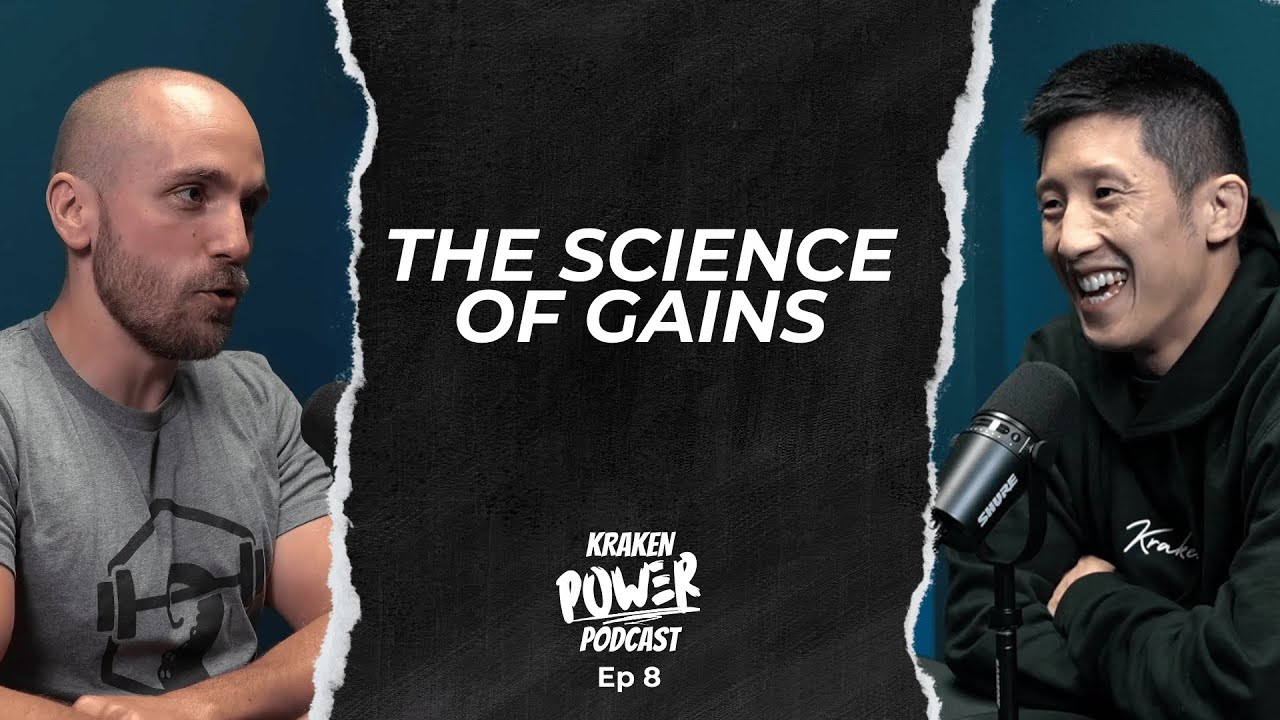
Listen to the Full Episode
Ep 8 — The Muscle Building Blueprint is available on all major platforms: