
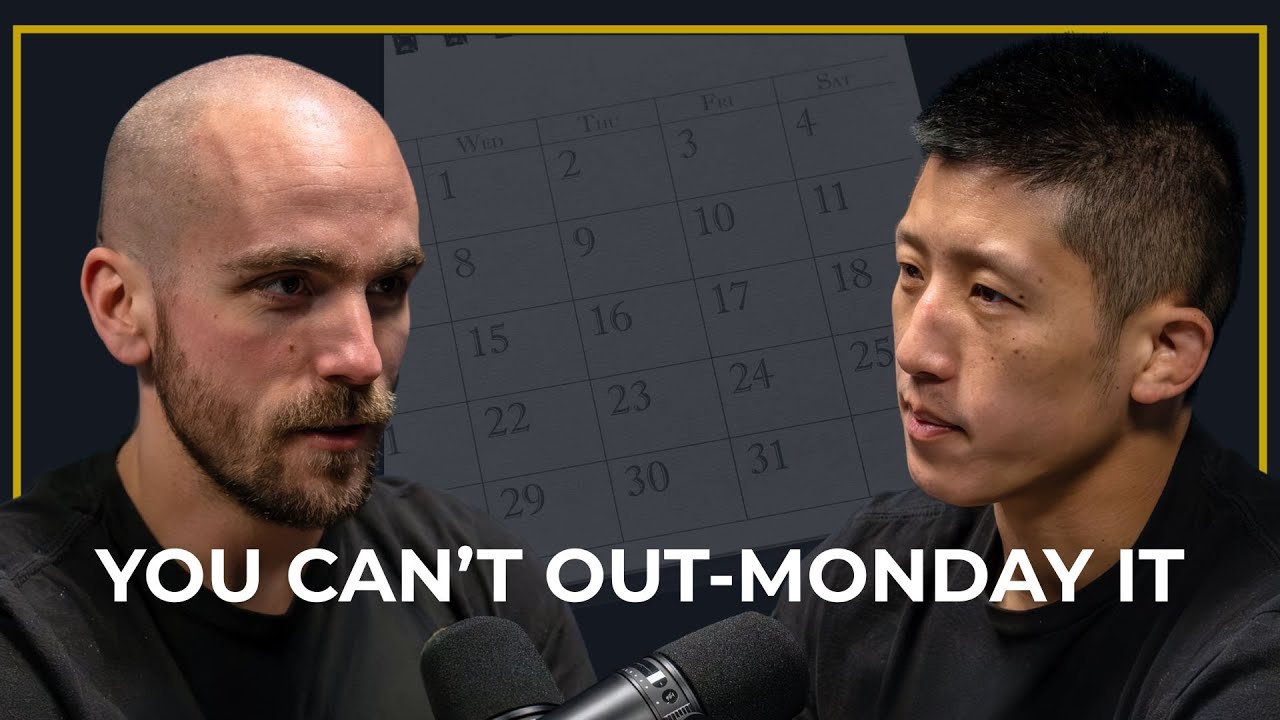
You can’t out-Monday a bad weekend. At Kraken Fitness in North Burnaby, near Brentwood, coaches see the same pattern constantly: clients who are dialed in Monday through Friday and then undo all of it in two nights of drinking, overeating, and sleeping three hours. The fix isn’t more discipline — it’s understanding why you’re really going out, setting boundaries, and stringing together a few clean weekends to break the cycle.
Watch: The Weekend Binge Spiral
In this episode of the Kraken Power Podcast, Josko and Brandon tackle the weekend binge cycle — the pattern that ruins more fitness transformations than any bad workout program or diet plan.
The Damage Is Worse Than You Think
A bad weekend doesn’t just cost you two days. It costs you two weeks. Brandon tracked this with his Oura Ring and saw that after a weekend of drinking and poor sleep, his heart rate variability crashed — and it took a full two weeks to recover back to baseline. Not two days. Two weeks.
That means if you’re binging every other weekend, you never actually recover. You’re perpetually in a hole.
Your body doesn’t know what a weekend is. It doesn’t recognize the social construct of Monday through Friday being “on” and Saturday through Sunday being “off.” From your body’s perspective, it’s just seven days — and if two of those days involve alcohol, poor food, and three hours of sleep, you’re spending the next five days just recovering to baseline. You never actually make forward progress.
Josko puts it bluntly: in your body’s opinion, it’s probably just seven days of treating your body like crap. The weekdays aren’t progress — they’re recovery from the weekend.
Working out is only beneficial if your body can recover from it. If you train hard Monday through Friday and then destroy your recovery capacity on the weekend, those five training days aren’t building anything. They’re just adding stress to an already-stressed system.
Why Consistent People Are Most at Risk
The weekend binge spiral is most dangerous for people who are already consistent during the week. That sounds counterintuitive, but Brandon experienced it firsthand.
When you’re someone who always gets back on track Monday morning, that reliability becomes permission to go off the rails every weekend. The thinking is: “Don’t worry about it, I’ll just get back on it Monday.” And you do get back on it Monday. Every single time. Which is why you keep doing it.
But the data tells a different story. Brandon tracked his weight, his performance, and his recovery for years during this cycle. His weight stayed the same. His performance didn’t improve. He wasn’t making progress despite training hard and doing jiu-jitsu multiple times per day during the week.
The consistency itself masked the problem. He was consistent at yo-yoing — consistently working hard for five days and then consistently undoing it for two.
The psychological damage compounds too. You’re working hard all week, not seeing results, and then wondering what’s wrong. That erodes your belief that the process works. It makes you more likely to try extreme diets, extreme programs, or just give up entirely.
Ask Yourself Why You’re Really Going Out
Kraken’s coaches use one question to help clients break the cycle: “Are you hanging out with your friends to hang out with your friends? Or are you hanging out to drink and binge?”
Josko walks through the Cactus Club example. Your friend has a birthday dinner. Ask yourself:
- Are you going because it’s your friend’s birthday? Yes. Then go. Be there. Celebrate.
- Are you going to get drunk? No. Then you don’t need to drink.
- Are you going for the appetizers and steak? No. Then order a steak, skip the appetizers, drink water.
The honest version: sometimes the answer is “I’m going because I want to get drunk.” That’s fine — Kraken’s coaches aren’t going to shame you for it. But understand the math. A weekend like that costs two weeks of progress. If it happened last week too, you’re sliding backward. If it happened six months ago, you can probably absorb it.
The same logic applies to watching UFC with friends. If you’re going because you love UFC, you can watch it at home. If you’re going to hang out with friends, you can hang out without drinking. When you peel back the layers, the real driver is usually the emotional release from overeating and drinking — not the activity or the people.
Strategic Weekend Planning
The fix isn’t willpower. It’s planning. Here’s what Kraken’s coaches recommend:
Set boundaries before the weekend arrives. Know what’s happening. If UFC is on at 10 PM, decide in advance: you’ll stay until 10:30 and then go home. You’ll have one or two drinks, not ten. You’ll eat before you go.
Protect your sleep. Whatever you do on Friday and Saturday nights, the non-negotiable is still getting close to eight hours of sleep. That alone prevents the worst of the cascading damage — because bad sleep leads to bad food choices, which leads to skipping Monday’s workout, which leads to a week-long slide.
Ask: who actually supports your goals? Josko and Brandon both acknowledge that some friendships don’t survive a lifestyle change. Brandon doesn’t see many of the people he used to drink with every weekend. That’s not a sad story — it’s what happens when your identity shifts and theirs doesn’t. The friends who matter will respect your boundaries. The ones who pressure you to drink might not be the friends you need.
Use shame productively. This one’s unconventional. At Kraken, the coaches say a little bit of shame after a binge weekend is actually useful — if it stops you from doing it again. The shame isn’t a problem. The problem is feeling the shame and then doing the same thing next weekend anyway. Lean into the shame. Ask why you feel it. Usually it’s because you went in with a plan and didn’t follow it.
The Four-to-Six Week Test
Brandon’s recommendation for clients stuck in the weekend spiral is simple: string together four to six clean weekends and see what happens.
Not perfect weekends. Not monastic weekends. Just weekends where you stay roughly on plan — decent sleep, reasonable food, minimal or no alcohol. Four to six of them in a row.
What clients find is that the positive feedback loop from actually seeing progress is more rewarding than the emotional release from a binge weekend. Once you see your weight trending down, your energy improving, your gym performance going up, and your recovery data looking good, the Saturday night binge starts feeling like a worse trade-off.
Josko adds the identity piece: to get the results you want, you have to become the person who gets those results. If you want six-pack abs, you have to live the six-pack ab lifestyle — and that lifestyle doesn’t include getting destroyed every weekend.
This isn’t about being perfect forever. It’s about breaking the pattern long enough to see what’s on the other side. Four to six weeks. That’s the experiment Kraken’s coaches ask clients to commit to. The results usually speak for themselves.
FAQ
Can I out-train a bad weekend?
No. Kraken’s coaching data shows that a weekend of heavy drinking and poor sleep takes roughly two weeks to fully recover from — not two days. If you’re binging every weekend, your weekday training is just recovery, not progress. The math doesn’t work no matter how hard you train Monday through Friday.
How much does one night of drinking set back fitness progress?
One night of heavy drinking can crash your heart rate variability for up to two weeks. It disrupts sleep quality, increases cravings the next day, and creates a cascading effect on food choices and energy. A single drink or two has minimal impact, but a binge night creates measurable setbacks.
What if my friends pressure me to drink on weekends?
The friends who support your goals will respect your boundaries. Kraken’s coaches recommend being honest, but you can also just say you’re sick if you’re not ready for the conversation. Some friendships naturally evolve as your lifestyle changes, and that’s normal.
How do I stop the all-or-nothing weekend mentality?
Start by stringing together four to six weekends where you stay roughly on plan. The positive feedback loop from seeing real progress is more rewarding than the emotional release from binging. Once you experience what consistent progress feels like, the trade-off becomes obvious.
Is it okay to feel shame after a binge weekend?
Kraken’s coaches say a little shame is useful if it prevents you from repeating the pattern. The problem isn’t feeling shame — it’s feeling shame and doing the same thing next weekend anyway. Use the shame as data to figure out what boundary you need to set before the next weekend.
Ready to Start?
If weekends keep undoing your progress and you want coaching that addresses behavior — not just workouts — Kraken Fitness in North Burnaby near Brentwood offers a free trial week. The coaching team will help you build a plan that survives Saturday night.